About the Studienkolleg
The State-Approved Studienkolleg Halle-Merseburg at Merseburg University of Applied Sciences (SKHM) has been preparing international applicants for higher education in Germany since 2016 and, on behalf of the German federal state of Saxony-Anhalt, independently conducts the Internal State University Entrance Qualification Examination (Feststellungsprüfung, FSP), including the assessment of prior academic grades.
Who we are
Operator
The SKHM is operated by Ming CHENG Institut GmbH (MCI), headquartered in Halle (Saale). The German federal state of Saxony-Anhalt granted the Studienkolleg state approval on 15 August 2016.
Identity
The SKHM is an independent, privately operated educational institution with its own campus in Halle-Neustadt. It works closely with Merseburg University of Applied Sciences and, through its graduates, is connected with more than 100 German universities. Its students include international applicants as well as recipients of government scholarship programmes.
Development
- 2016
- State approval; first scholarship students from the United Arab Emirates.
- 2017
- First graduates take up their university studies. Support for scholarship students from the State of Qatar and the “DAAD-Integra” programme begins.
- 2023
- Completion of the DAAD funding programme “DAAD-Integra” (funded by the German Federal Ministry of Education and Research): more than 300 participants successfully prepared for studies at German universities.
- Today
- By the winter semester 2026/27, more than 2,000 graduates at more than 100 German universities; direct exchange with the embassies of the United Arab Emirates and the State of Qatar in Berlin.
Our approach
Academic preparation
Two subject semesters with subject teaching, German as a technical and academic language and regular assessments – up to the State University Entrance Qualification Examination.
Individual student support
Dedicated contact persons in the student office, help with organisational matters and our own residence close to the campus.
University pathways
Guidance in choosing a university and degree programme, and a long-standing exchange with the universities our graduates attend.
State approval and academic standards
State approval is the SKHM's central mark of quality: it covers the independent delivery of the university focus courses and of the State University Entrance Qualification Examination (Feststellungsprüfung, FSP).
Internal state examination including prior grades
On behalf of the German federal state of Saxony-Anhalt, the SKHM independently conducts the State University Entrance Qualification Examination – as an internal examination that takes prior grades into account.
Valid throughout Germany
The SKHM's state FSP certificate grants access to studies at all state universities and universities of applied sciences in all 16 German federal states – in the subject areas of the respective focus course.
All fields of study
With the focus courses T, M, W and G, the SKHM covers all university fields of study: whatever you want to study in Germany, there is a matching course.
Which course matches your study plans?
- TT course
mathematics, natural sciences and engineering - MM course
medicine, biology, (bio)chemistry and pharmacy - WW course
economics, business and social sciences - GG course
languages, literature and humanities
Courses, subjects and feesAdmission to a particular degree programme is decided by the university.
Leadership
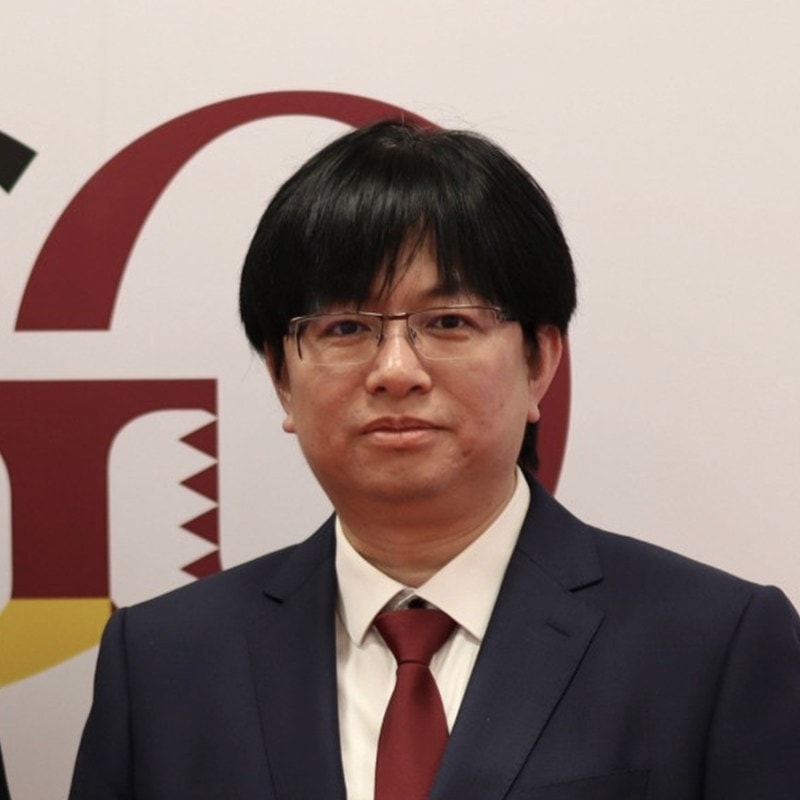
Since 2016, we at the SKHM have accompanied more than 2,000 young people from over 80 countries through their preparation for university and the Internal State University Entrance Qualification Examination (FSP) on their way to German universities. I am truly glad to be part of their life stories.
Among our students, many lifelong friendships have formed – and some couples have even married. Today, our former students work in Germany and abroad, among other fields, in medicine and dentistry, psychology, law, computer science, engineering and architecture, management, social services and the public sector – some even in the diplomatic service.
Long after their time at the SKHM, I still feel connected to our former students and wish them the very best, both personally and professionally.
The figures on students and countries of origin refer to the status after the state FSP in the summer semester 2026.
Ming CHENG M.A. LL.M. (OUHK)
Academic Director
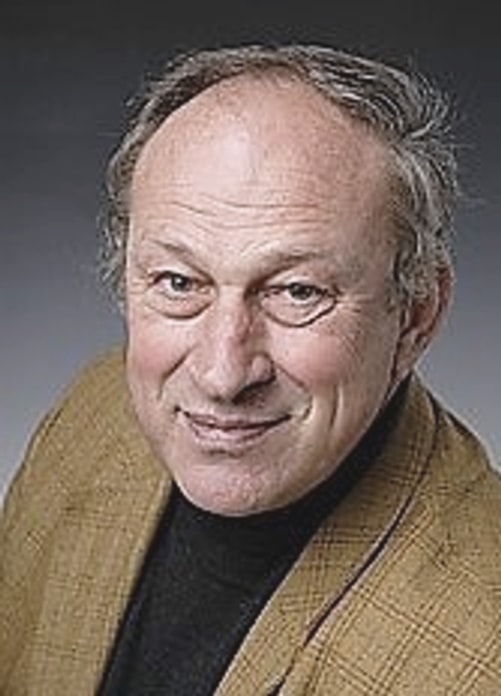
Prof. Dr. rer. nat. Ralph Großmann
Deputy Director
Campus Halle-Neustadt
The SKHM has its own campus of around 6,900 m² with around 2,600 m² of seminar space. The campus offers 19 seminar and teaching rooms, an assembly hall of around 400 m² with floor-to-ceiling windows, two atriums and two lounges – a setting for lessons as well as for festivals and concerts. A Bechstein concert grand piano from 1910 is used for the campus piano concerts.
Halls of residence
Exclusively for SKHM students: more than 150 fully furnished single rooms in shared flats for three, right next to the campus.
Entrance of the campus at An der Magistrale 120 Assembly hall with the 1910 Bechstein concert grand piano Seminar room with screen and blackboard Campus building seen from the street, with the tram tracks in front Foyer with floor-to-ceiling windows to the atrium Foyer with seating in front of the windows to the atrium
Foyer with seating next to the corridor Foyer with seating between the corridor and the atrium Corridor between the seminar rooms Assembly hall, undivided, with seating for an event Assembly hall with rows of chairs and lectern Assembly hall with rows of tables, grand piano and piano
Assembly hall with lectern and rows of chairs, mobile partition closed Assembly hall with closed mobile partitions Hall F with single desks, e.g. for examinations Mobile partition dividing Hall F into separate seminar rooms Seminar room with mobile partition Meeting room, e.g. for oral examinations
University network & alumni
Since the winter semester 2017/18, our graduates have been studying not only at Merseburg University of Applied Sciences but at more than 100 universities, including Charité – Universitätsmedizin Berlin, TU Berlin, FU Berlin, HU Berlin, RWTH Aachen, TU Munich, TU Darmstadt, TU Dresden, Heidelberg University, the universities of Hamburg, Frankfurt, Bonn, Freiburg, Würzburg, Leipzig and Halle.
Professional cooperation
The SKHM works closely with these institutions – each with a clear focus.
Merseburg University of Applied Sciences
Merseburg, Saxony-Anhalt
State Studienkolleg of Saxony-Anhalt (Köthen campus) at Anhalt University of Applied Sciences
Köthen, Saxony-Anhalt
Osnabrück University of Applied Sciences
Osnabrück, Lower Saxony
Voices on the SKHM
A minister, a state secretary, ambassadors, the lord mayor and university leaders on the SKHM and its students – in greetings, during visits and encounters.